
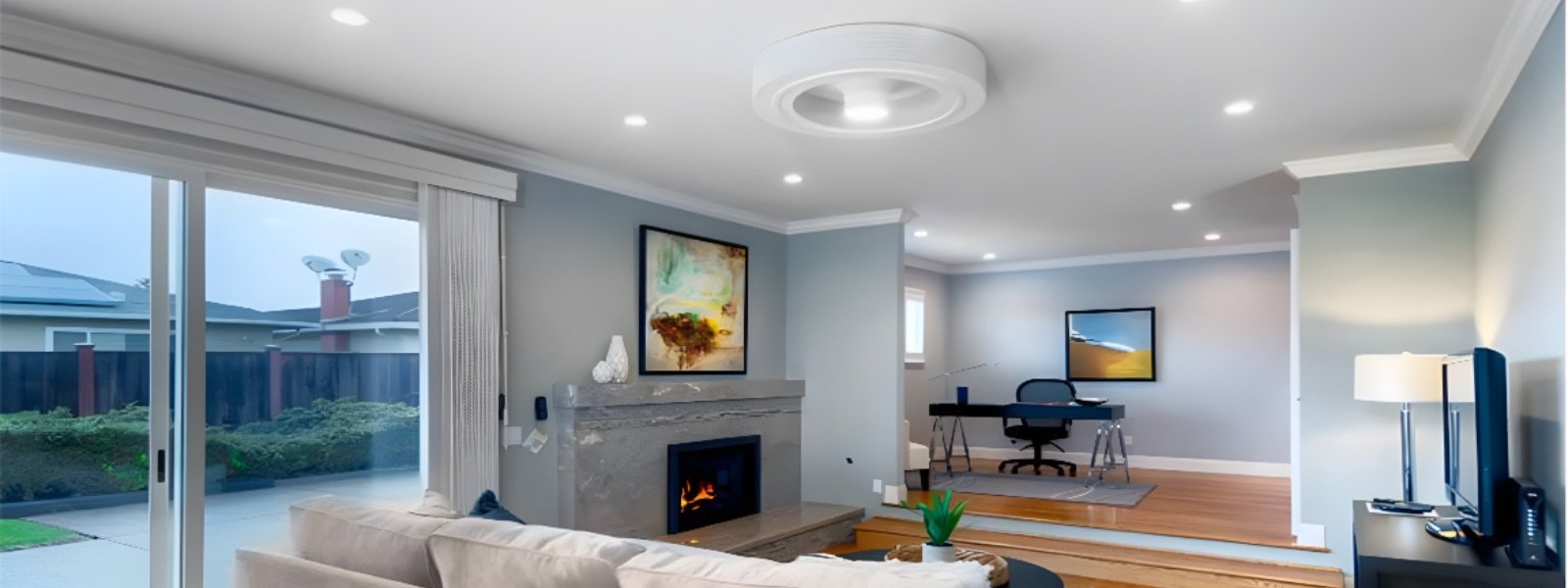
In Jamaica, high humidity is not a seasonal inconvenience — it is a year-round reality. With indoor humidity levels frequently exceeding 60%, as documented in the SMIA-RCCS Limited indoor air quality case study available at smia-rccs.com, the risk of mold, mildew, and poor indoor air quality is a constant challenge for homeowners, hotel operators, and facility managers across the island. One of the most effective and energy-efficient tools for managing indoor humidity is the bladeless ceiling circulator. Here is what you need to know.
Main Causes of Indoor Humidity in Jamaica
To choose the right solution, it helps to understand where excess indoor humidity comes from. Common sources include cooking steam, bathroom moisture, laundry dried indoors, occupant respiration, open windows and doors during humid weather, and — particularly in older buildings — moisture infiltration through walls, roofing, or floor structures. Poorly ventilated rooms compound the problem by allowing water vapour to accumulate until condensation appears on surfaces.
Without consistent air movement or dehumidification, humidity settles in permanently — leading to mold growth, musty odours, damage to walls and furnishings, and health risks for occupants including respiratory irritation and allergic reactions.
Why Reducing Indoor Humidity Matters
Excess humidity affects both the health of occupants and the structural integrity of a building. Beyond visible deterioration of paintwork, finishes, and furnishings, high humidity makes indoor environments feel heavier and warmer — making air conditioning less effective and more costly to run. The ideal indoor humidity range for preventing mold growth is 30 to 50 percent. Keeping humidity in this range also helps limit dust mite populations and reduces airborne allergens, making the indoor environment healthier for everyone.
The Role of the Ceiling Fan in Reducing Humidity
Unlike a simple desk or stand fan, a quality ceiling circulator like the Exhale Gen-5 ensures even circulation of ambient air throughout the entire room — eliminating the stagnant zones where moisture accumulates. By continuously moving air across all surfaces, it reduces condensation on walls, windows, and tile grout, and helps evaporate moisture from the air.
The result is less mold, fresher air, and a noticeably more comfortable environment — particularly after activities that generate steam, such as cooking, showering, or air-drying laundry indoors. During Jamaica’s rainy season or in naturally humid environments near the coast, this benefit is especially pronounced.
How the Exhale Gen-5 Works to Prevent Humidity Build-Up
The Exhale Gen-5 draws air upward from the centre of the room and redistributes it gently in a full 360-degree pattern around the walls, creating a smooth circular airflow that reaches every corner. This means no dead zones, no stagnant pockets of humid air, and no localised areas where moisture accumulates unaddressed.
When paired with sensible ventilation habits — such as opening windows during the cooler morning hours and ensuring bathroom and kitchen extractors are functioning effectively — the Exhale Gen-5 ensures that every part of the room benefits from active air circulation. The outcome is consistently healthier, drier, and more comfortable indoor air, day after day.
Combining the Exhale Gen-5 with Natural Solutions
For best results, combine the Exhale Gen-5 with complementary strategies. Moisture-absorbing materials such as activated charcoal, silica gel, or coarse salt placed in enclosed areas — cupboards, behind furniture, or in closets — can capture excess vapour without electricity. Certain indoor plants also help regulate ambient humidity naturally. For severely affected areas such as basement rooms or windowless spaces, adding a portable dehumidifier alongside the Exhale Gen-5 provides maximum protection against mold and moisture.
Other Effective Measures to Limit Indoor Humidity
Good daily habits make a significant difference. Opening windows for even a short period each morning — particularly before the heat of the day builds — allows natural air exchange and removes accumulated overnight humidity. Where possible, drying laundry outdoors dramatically reduces the amount of steam generated indoors.